10 Most Famous Festivals of Uttarakhand: A Complete Guide to the Cultural Soul of Devbhoomi
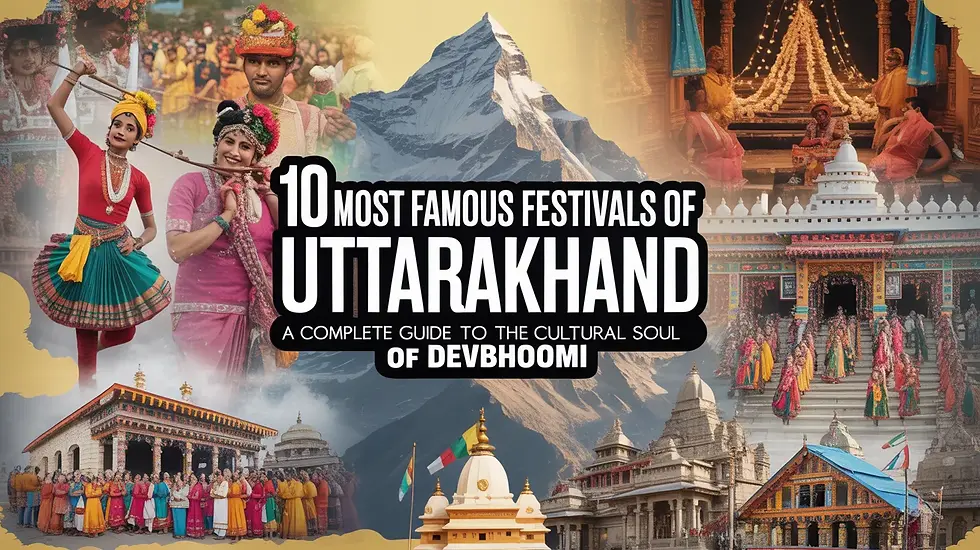
Uttarakhand, also known as Devbhoomi or the Land of the Gods, is renowned not only for its magnificent Himalayan peaks, sacred rivers, and spiritual sites but also for its rich cultural heritage, expressed through vibrant festivals. All of Uttarakhand's festivals reflect the state's local traditions, community bonds, and deep reverence for nature. Each festival is deeply rooted in regional history and beliefs, making them unique and spiritually significant.
Understanding the 10 most famous festivals of Uttarakhand offers a true glimpse into the lifestyle, faith, and traditions of the people living in the Himalayan region. These festivals showcase the state's cultural diversity and are celebrated with great enthusiasm in villages, towns, and pilgrimage centers. They primarily revolve around seasonal changes, agricultural cycles, folk deities, and ancient customs passed down through generations. Let's explore 10 of Uttarakhand's most famous festivals in detail to understand their significance and cultural richness.
Kumbh Mela – A Grand Spiritual Gathering
Among the 10 most famous festivals of Uttarakhand, the Kumbh Mela holds a special place, known not only in India but throughout the world. The Kumbh Mela is celebrated every 12 years in Haridwar, attracting millions of devotees and tourists. It is believed that bathing in the holy Ganges River during the Kumbh Mela cleanses one of their sins and grants spiritual liberation.
The atmosphere during the Kumbh Mela is filled with devotion, with devotees chanting mantras and listening to religious discourses. Sadhus, ascetics, and spiritual leaders gather to participate in the rituals, making the Kumbh Mela one of the largest religious congregations. This festival reflects Uttarakhand's deep spiritual roots and its global religious significance.
Char Dham Yatra – A Sacred Pilgrimage
The Char Dham Yatra is another prominent name among the 10 most famous festivals of Uttarakhand. However, it's not a one-day celebration; it's a pilgrimage season. The pilgrimage to the four holy sites of Uttarakhand – Yamunotri, Gangotri, Kedarnath, and Badrinath – begins every year in the summer and continues until winter.
The Char Dham Yatra is a symbol of devotion, endurance, and faith. Millions of devotees from across India come here every year to complete this pilgrimage. The sacred Char Dham Yatra makes a significant contribution to religious tourism in Uttarakhand, which is crucial to maintaining the state's spiritual identity.
Harela Festival – A Celebration of Nature and Agriculture
Harela is one of the ten most famous festivals of Uttarakhand, a traditional and environmentally significant festival of the state. This festival is primarily celebrated in the Kumaon region and symbolizes the beginning of the rainy season, representing greenery, prosperity, and environmental awareness.
A few days before the festival, people sow seeds in small baskets and worship them as a symbol of a bountiful harvest. Harela reflects the strong bond between the people of Uttarakhand and nature, highlighting the importance of agriculture, ecological balance, and the unique way of life in the hills.
Nanda Devi Raj Jat Yatra – A Festival of Faith and Tradition
The Nanda Devi Raj Jat Yatra is one of the ten most famous and rarest festivals of Uttarakhand. This festival, held every 12 years, is known for its unique spirituality. Dedicated to Goddess Nanda Devi, this pilgrimage involves a long and challenging journey through the high Himalayan regions.
During the yatra, devotees walk for weeks, carrying sacred symbols, singing folk songs, and performing rituals. This pilgrimage represents devotion, endurance, and community participation, and also preserves ancient traditions that have remained unchanged for centuries.
Uttarayan Mela – Cultural and Historical Significance
The Uttarayan Mela, celebrated in the Bageshwar district of Uttarakhand during Makar Sankranti (the second week of January), is held near the Bagnath Temple on the banks of the Saryu and Gomti rivers. This fair is one of the 10 most famous festivals of Uttarakhand. The Uttarayan Mela holds historical significance, and devotees earn merit by taking a dip in the holy confluence, which symbolizes the sun's northward journey.
This fair was once a platform for social movements during British rule. Traditional dances, music (Chholiya), and cultural programs are presented by Kumaoni artists at the fair. Local people come here to sell woolen clothes, blankets, carpets, herbs, spices, and other goods.
Phool Dei – A Festival Celebrated by Children
Phool Dei is a major traditional festival of Uttarakhand, and it ranks among the 10 most famous festivals of the state. Phool Dei is celebrated by children on the first day of the Chaitra month (March-April). Children celebrate this festival by collecting flowers from the fields early in the morning and going from house to house, placing them on doorsteps. In return, they receive jaggery, rice, and money. Phool Dei is considered a symbol of innocence, joy, and the changing seasons, and it is one of the most traditional and charming festivals of Uttarakhand.
Makar Sankranti – A Festival of Change and Faith
Although Makar Sankranti is celebrated throughout India, it holds unique cultural significance in Uttarakhand, making it one of the 10 most famous festivals of the state. Makar Sankranti is celebrated annually in January (on the 14th or 15th), when the sun enters the Capricorn constellation from Sagittarius.
It is based on the solar calendar and marks the beginning of Uttarayan (the sun's northward movement), after which the days grow longer and the nights shorter. People take holy dips in rivers, prepare traditional sweets, and perform religious rituals. In many parts of Uttarakhand, fairs are also held during Makar Sankranti.
Ghee Sankranti (Olgia) – Celebrating Hard Work and Health
Ghee Sankranti, also known as Olgia, is a traditional festival primarily celebrated in the Kumaon region. Although it is one of the lesser-known festivals, it is still considered among the top 10 most famous festivals of Uttarakhand.
This culturally rich festival emphasizes physical strength and nourishment. During this festival, people consume dishes made with ghee and express gratitude for agricultural produce. Ghee Sankranti reflects the Pahari (hill) lifestyle, where people deeply respect hard work and good health.
The Bikhauti Fair (Syalde Bikhauti Fair)
The Bikhauti Fair (Syalde Bikhauti Fair) is held in Dwarahat, Almora district, Uttarakhand. The main attractions of this fair are the Vimandeshwar Mahadev Temple and the surrounding market area. This historical fair is held every year at the beginning of the month of Vaishakh (April 13-14). Here, you can clearly witness the culture of Uttarakhand, including the traditional Chholiya and Jhora dances and folk songs. This fair showcases the unique culture of Kumaon.
Basant Panchami – Welcoming Spring with Devotion
Basant Panchami is celebrated with great joy on Magh Shukla Panchami, marking the arrival of Saraswati, the goddess of learning, and the king of seasons, spring. On this day, people wear yellow clothes and worship Goddess Saraswati.
According to some mythological beliefs, on this day, Lord Brahma manifested Goddess Saraswati from his mouth, spreading the light of knowledge, wisdom, and art to the world. This day is also celebrated in this way. However, in some parts of Uttarakhand, such as Pithoragarh, there is a tradition of piercing the nose and ears on Basant Panchami, which is considered very auspicious.
The Cultural Significance of Uttarakhand's 10 Most Famous Festivals
Uttarakhand's 10 most famous festivals are not just celebrations, but living traditions that reflect the state's art and culture. These festivals preserve Uttarakhand's customs and community ties, foster harmony between man and nature, and play a vital role in promoting tourism, offering authentic cultural experiences to tourists who visit the state during these festivals. Each festival showcases a different aspect of Uttarakhand life. Together, they form a cultural fabric that keeps the state's heritage alive for generations to come.
Conclusion
The festivals of Uttarakhand are deeply rooted in the everyday lives of its people, reflecting the pride of devotion and love. Each festival has its own unique story, whether it is a grand spiritual festival like the Kumbh Mela or a simple and joyous celebration like Phool Dei.


Comments